Cart
Your cart is empty


A Golden Dome, an Emperor's Tomb, and Centuries of History Awaiting Inside
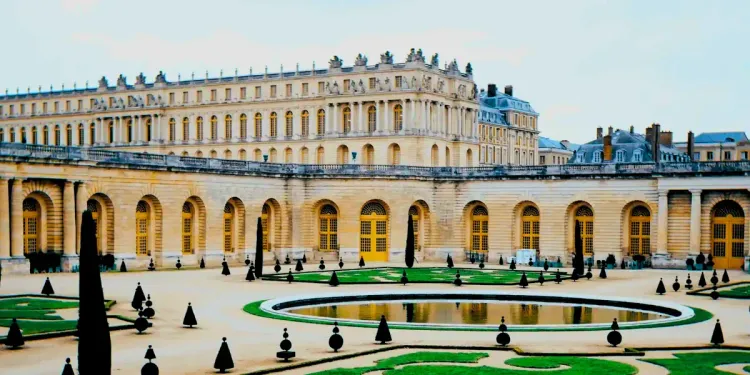
Louis XIV built Les Invalides in 1670 as a home for the soldiers who had fought in his wars. Today it houses one of the largest and most notable military collections in the world, spread across a complex of courtyards, galleries, and churches that requires time to properly absorb. As you cross the entrance, sixty bronze cannons line the main courtyard and the golden dome rises above it all, announcing that what lies inside is not your typical museum visit.
The collections span centuries without losing their appeal. Medieval armor worn by French kings, the weapons and uniforms of Napoleon's Grande Armée, immersive galleries dedicated to the two World Wars, and a full multimedia space dedicated to Charles de Gaulle. Each room slightly shifts the perspective. The building has the kind of atmosphere that makes you slow down without realizing it.
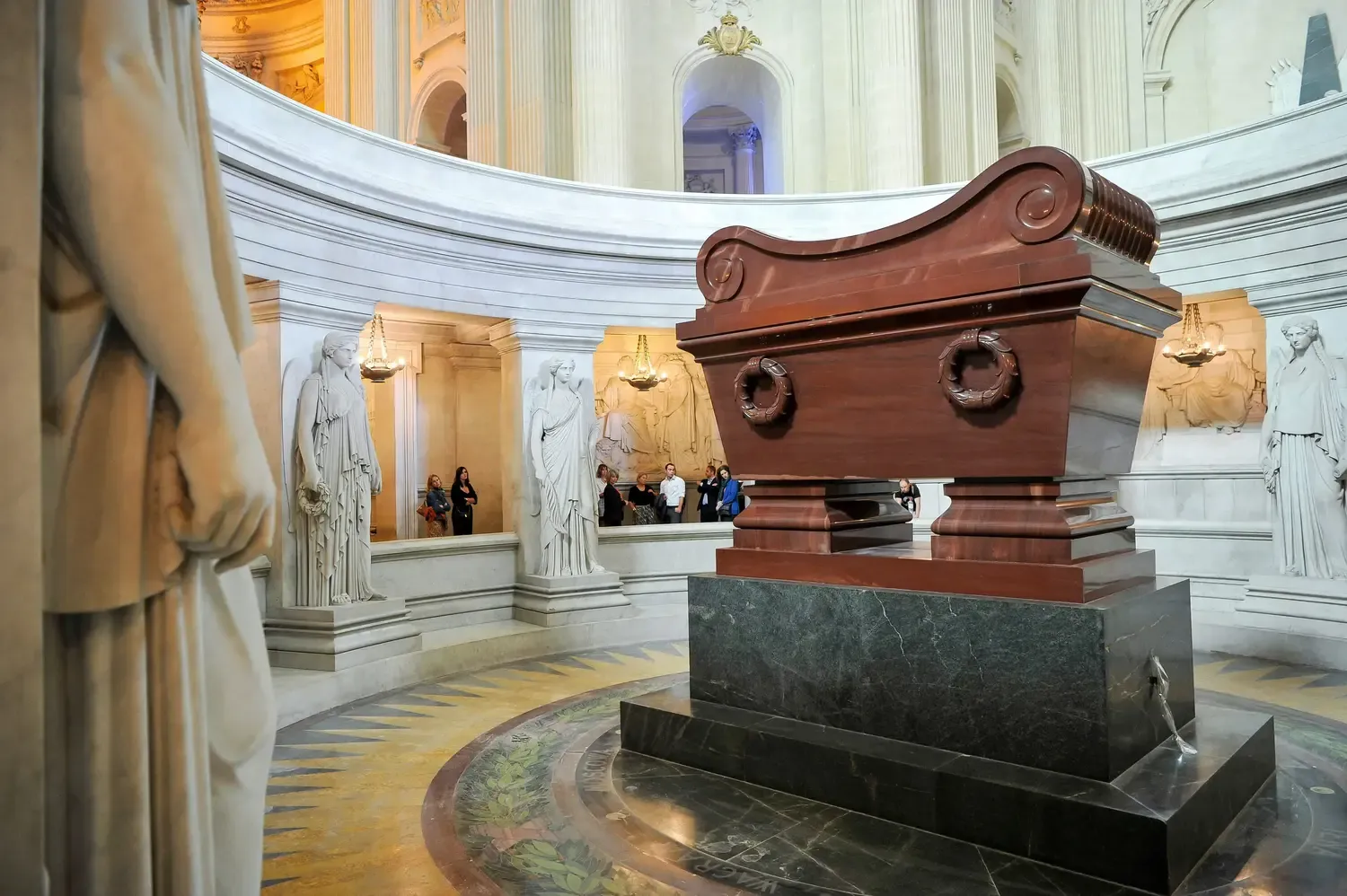
Under the dome, in an open crypt surrounded by twelve monumental statues and a mosaic floor mapping the battles of the Empire, Napoleon's tomb dominates the space in a way that photographs never quite capture. His gray coat, bicorne hat, and Austerlitz sword are displayed nearby, close enough to make the distance between then and now feel surprisingly small. It's the kind of place you think about long after you've left Paris.

The Musée de l'Armée is open every day of the week from 10:00 to 18:00. Note that the galleries begin to close 5 minutes before the official closing time, so make sure you're already inside the room you want to see before the clock runs out.
On Tuesdays during temporary exhibitions, the museum remains open until 21:00, a quieter alternative to daytime visits. Check in advance if there is an exhibition running during your trip.
The Musée de l'Armée closes only three days a year: January 1st, May 1st, and December 25th. Practically every other day on the calendar, including all other holidays, the museum remains open and accessible to visitors.

Some areas may close without prior notice due to state ceremonies or security requirements. If your visit coincides with a national date or major event, confirm access in advance.
A ticket grants you full access to the permanent collections and any ongoing temporary exhibition during your visit. You can also enter the Cathedral of Saint-Louis des Invalides and the Museum of the Order of the Liberation, dedicated to the history of Free France and the Companions of the Liberation. An interactive audio guide is also included, subject to availability on the day of the visit.
The general ticket does not cover guided or private tours, which require a separate booking. Concerts, lectures, and commemorative events held in the complex have their own ticket sales. Educational and family workshops organized by the museum are also separate. Books, guides, collectibles, and postcards from the museum shop are purchased on-site at your own cost.
The Musée de l'Armée is one of the largest military museums in the world, and most visitors spend between two and three hours inside. If you wish to explore the collections in depth and also visit the Dome of the Invalids and the Cathedral, reserve a full half-day to do so comfortably without feeling rushed.
Entry to the Dome of the Invalids is included in your general ticket. This baroque building is one of the most prominent monuments in all of Paris and houses the monumental tomb of Napoleon Bonaparte, as well as the tombs of Vauban, Marshal Foch, and Lyautey. It is a highlight that alone justifies the visit.
These photos give you an idea of what awaits you. From the golden dome to the medieval armor rooms and Napoleon's legendary insignia, every corner of the Musée de l'Armée has something worth stopping to see.


The museum is at 129 Rue de Grenelle, 75007 Paris. It is located on the south bank of the Seine, less than a 10-minute walk from the Pont Alexandre III and the Rodin Museum, and about a 20 to 25-minute walk from the Eiffel Tower or the Champs-Élysées.
By metro, the nearest stops are Invalides or La Tour-Maubourg on Line 8, and Saint-François-Xavier or Varenne on Line 13. Several bus lines also serve the area, including lines 28, 69, 82, 87, and 92, with stops a short walk from the entrance. If you use Vélib', the nearest bike-sharing stations are at 3 Rue de Constantine, 9 Boulevard des Invalides, and 1 Avenue de la Motte-Piquet.
Yes. There is an underground parking lot directly beneath the Esplanade des Invalides, just a few meters from the main entrance. It is a convenient option if you arrive by car.
Yes. Same-day tickets are often available online, and you can receive a mobile ticket with real-time availability confirmation. It is still recommended to book online in advance, especially during periods of high demand, to avoid waiting at the ticket office.
Yes, completely. Your standard admission ticket gives you full access to the Dome of the Invalids, where Napoleon's monumental tomb is located. No separate ticket or upgrade is needed. The tomb, permanent collections, and any ongoing temporary exhibition during your visit are covered by the same price. Some special temporary exhibitions may occasionally require an additional ticket, but this is the exception rather than the rule.
The Musée de l'Armée is one of the largest history museums in Paris, so the honest answer depends on how deeply you wish to explore it. If you want to see the main highlights, including Napoleon's tomb, the medieval armor collection, and the World War galleries, plan for at least two to three hours. If you want to tour the entire museum at a leisurely pace, dedicated history enthusiasts should allocate four to six hours or a full half-day. A practical approach is to decide in advance which era interests you the most and start there.
First-time visitors consistently point out four things: Napoleon's tomb under the golden dome, which is genuinely one of the most impressive monuments in Paris; the collection of ancient weapons and armor, considered one of the best royal collections in the world; Napoleon's personal belongings, including his iconic bicorne hat and coat; and the extensive World War I and II galleries that cover both wars in considerable depth.
Yes. The combination of armor, swords, military artifacts, and multimedia displays tends to capture the attention of younger visitors well. The layout is spacious and easy to navigate as a family, and there is enough variety in the different wings to keep children moving and interested throughout the visit.
Yes. The museum features elevators, accessible restrooms, and wheelchair loans available at the entrance upon presentation of an ID. If you have specific accessibility requirements beyond standard wheelchair access, it is worth contacting the museum directly before your visit to confirm arrangements.
All visitors go through a security check at the entrance, and large bags or bulky luggage are not allowed inside. Photography without flash is permitted throughout the museum for personal use, except in rooms or exhibitions that indicate otherwise. In the Dome of the Invalids and around Napoleon's tomb, visitors are asked to keep noise to a minimum and silence their phones, as these are spaces of commemoration and reflection. A respectful appearance is expected in all ceremonial areas. Animals are not allowed inside the museum, with the exception of properly identified guide and assistance dogs.